
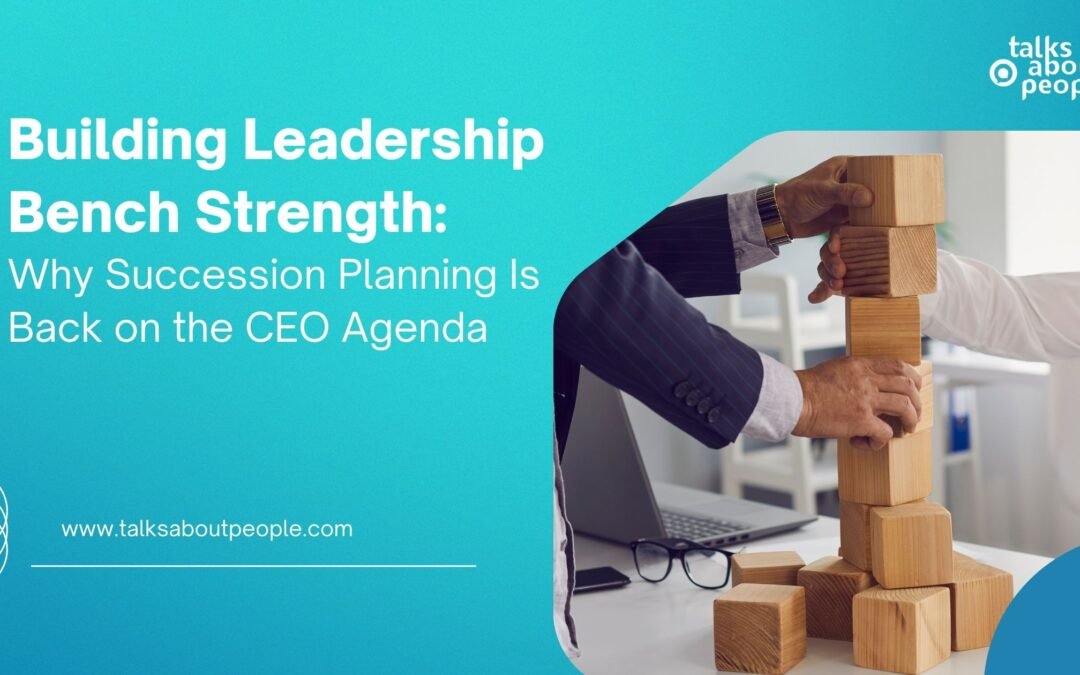
For many years, succession planning quietly slipped down the priority list for CEOs. Rapid growth, market volatility, and the pressure to deliver short-term results pushed leadership continuity into the background. However, in 2026, leadership bench strength is back at the centre of CEO and boardroom conversations, not as a theoretical exercise, but as a critical business imperative.
Recent leadership exits, organisational restructures, and rising executive mobility have exposed a hard truth: companies that lack ready leadership depth are far more vulnerable to disruption than they realise. Succession is all about ensuring continuity, resilience, and performance in an environment defined by constant change.
Why Leadership Bench Strength Matters More Than Ever
Leadership bench strength refers to an organisation’s ability to fill critical leadership roles quickly and effectively, using internal talent that is prepared to step up when needed. It is the difference between stability and scramble when a key leader exits or a new mandate emerges.
Lately, leadership transitions have been happening more frequently and with less warning. Executives are stepping down earlier, roles are being redefined, and new leadership capabilities are required at a pace most organisations did not anticipate. Without a strong bench, companies are forced into reactive hiring decisions that often prioritise speed over fit.
For CEOs, this creates a significant risk. Leadership gaps at the top can stall strategy, unsettle teams, and erode stakeholder confidence. Building leadership bench strength reduces this risk by ensuring that leadership continuity is planned, not improvised.
The Shift From Replacement Planning to Readiness Planning
Traditional succession planning focused on replacement. Who would take over a specific role if a leader left? While this approach offers some structure, it is no longer sufficient. Modern leadership roles are fluid, and future requirements rarely look like the past.
What CEOs are now prioritising is leadership readiness. This means developing leaders who can adapt to evolving mandates, manage ambiguity, and lead through transformation, even if the exact role they step into changes over time.
Strong leadership bench strength is about creating a pool of leaders with the capability, mindset, and exposure to step into multiple critical positions as the organisation evolves.
Why CEOs Are Reprioritising Succession Planning
Several forces are pushing succession planning back onto the CEO agenda.
1. Leadership churn has increased across industries. Senior exits are no longer rare events, and the cost of being unprepared is high.
2. Boards are demanding greater visibility into leadership continuity and risk. Succession is now viewed as a governance issue, not just an HR initiative.
3. Growth itself has become more complex. Expansion into new markets, digital transformation, and global operating models require leaders with different skill sets than those who succeeded in the past. Without intentional bench development, organisations struggle to keep pace.
For CEOs, this means taking ownership of leadership bench strength as a strategic priority, not delegating it entirely to HR.
Common Gaps in Leadership Bench Strength
Despite good intentions, many organisations still fall short when it comes to building a robust leadership bench.
One common issue is over-reliance on a small group of high performers. When leadership responsibility is concentrated in a few individuals, succession risk increases dramatically.
Another challenge is equating performance in a current role with readiness for a future one. High-performing functional leaders are not automatically prepared for broader enterprise roles.
Additionally, many companies lack structured exposure for emerging leaders. Without opportunities to lead across functions, manage complexity, or engage with senior stakeholders, potential successors remain untested.
Addressing these gaps requires a deliberate, long-term approach to leadership development.
Building Leadership Bench Strength Intentionally
Strengthening leadership bench strength starts with clarity. CEOs and leadership teams must define what future leadership success looks like. This includes identifying the capabilities, behaviours, and decision-making skills required to execute the organisation’s strategy over the next three to five years.
Next comes assessment. Organisations need an honest view of their current leadership bench. Who is ready now? Who could be ready with development? Where are the critical gaps? This requires structured evaluations and data-driven insights.
Development is the third pillar. High-potential leaders need targeted experiences. Stretch assignments, cross-functional exposure, and mentorship from senior leaders play a crucial role in building readiness.
Finally, succession planning must be dynamic. Leadership bench strength should be reviewed regularly, aligned with changing business priorities, and integrated into broader talent and workforce planning.
The Role of External Perspective
While leadership bench strength is built internally, external perspective is often invaluable. Independent advisors can help organisations assess leadership readiness objectively, challenge assumptions, and benchmark against market realities.
They also bring insight into how leadership roles are evolving across industries, helping CEOs avoid building benches for yesterday’s challenges. In many cases, a balanced approach that combines internal development with selective external hiring strengthens the overall leadership pipeline.
Looking Ahead
As organisations deal with uncertainty, leadership continuity will increasingly separate those that grow sustainably from those that struggle through disruption. Succession planning is a present-day requirement. CEOs who invest in leadership bench strength today are building organisational resilience, protecting strategic momentum, and creating a foundation for long-term performance.
At TAP, we work closely with CEOs and leadership teams to assess, build, and strengthen leadership bench strength. From succession planning to leadership readiness evaluation, TAP helps organisations ensure they are never caught unprepared when leadership matters most.
Contact us today!